
When you go to a casino, whether online or a real one, you probably hope to win some money. That's fun, right? But casino is also a business, and like any business, it needs to make profit. This profit comes from something called the "house edge". Don't be scared by the name! It's not a trick, it's just the built-in mathematical advantage the casino has over players for any game over a long, long time.
Think of it like this: if you flip a coin, there is 50/50 chance for heads or tails. If you bet $1 on heads and get $1 back when it wins, that's fair. But in casino, for example, they might give you $0.95 back for that $1 win, even if the odds are still 50/50. That small difference, that's the house edge. It means that over many, many coin flips, the casino slowly makes money. This is how the casino house edge explained simply.
The house edge isn't about luck on one spin or one hand. It's about how the payouts in casino games are designed. Casino odds are set so that the payouts for winning bets are always slightly less than the true mathematical odds of winning that bet. This difference is what gives the house its edge.
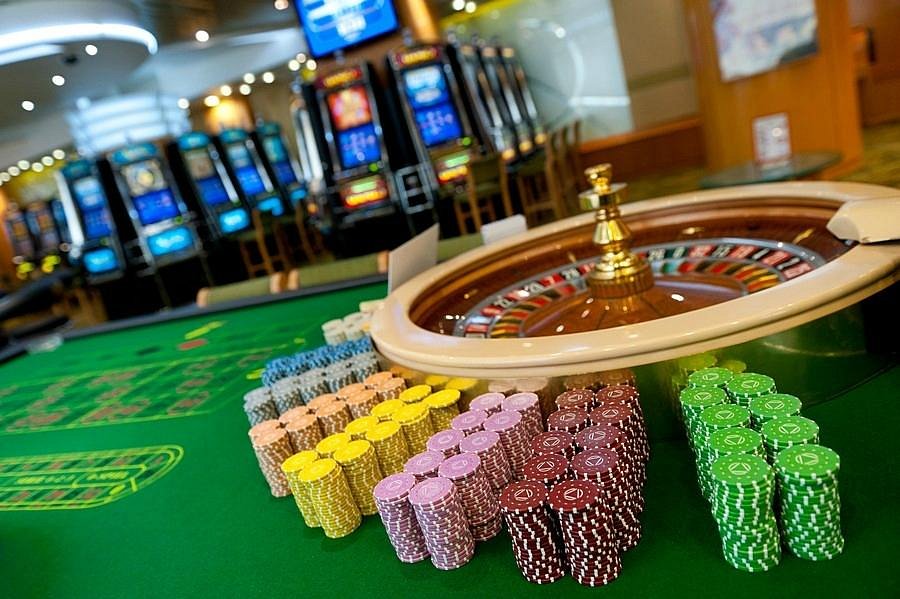
Let's take roulette as a good example to understand how house edge works. In American roulette, you have numbers 1 to 36, plus a single zero (0) and a double zero (00). So, there are 38 possible outcomes. If you bet on a single number, the true odds of winning are 1 in 38. But if you win, the casino only pays you 35 to 1. This means you get 35 units back for your 1 unit bet, plus your original 1 unit bet back.
Here's the math simple:
True odds of winning a single number bet: 1/38 = 2.63%
Payout odds: 35 to 1.
The house edge comes from that difference. In American Roulette, the house edge is about 5.26% on most bets. This means for every $100 bet over a long time, the casino expects to keep $5.26. This doesn't mean you will lose exactly $5.26 every $100 you bet, because short-term luck can be very different. But over thousands and thousands of bets, the numbers get very close to this average.
Not all games have the same house edge. Some games are better for players because they have a smaller edge, meaning the casino takes less over time. Knowing this is key to making smart choices when you play.
- Slots: Slot machines usually have a higher house edge, often ranging from 2% to 15% or even more. Instead of "house edge", you often hear "RTP" (Return to Player). If a slot has 96% RTP, it means 4% house edge. This means for every $100 put in, the machine pays back $96 on average over millions of spins.
- Blackjack: This game is famous for having one of the lowest house edges if you play with a good strategy. A skilled player can reduce the house edge to around 0.5% to 1%. But if you don't know strategy, it can be much higher.
- Roulette: As we saw, American roulette has about 5.26% house edge. European roulette, which only has a single zero (0) and no double zero (00), has a much lower house edge of about 2.7%. If you can choose, always play European roulette!
- Baccarat: This game also has a quite low house edge, especially when betting on the "banker" hand, which is usually around 1.06%. Betting on the "player" hand is slightly higher, about 1.24%.
- Poker (Casino Poker Games): Games like Casino Hold'em or Three Card Poker have house edges that vary depending on your strategy, but they are generally higher than traditional poker where you play against other players (where the casino takes a "rake" instead of an edge against your bets).
Knowing about the house edge is super important for several reasons:
- Game Selection: It helps you choose games that give you a better chance to win, or at least lose less over time. If you want your money to last longer, pick games with lower house edge.
- Manage Expectations: You understand that the casino always has an advantage. This means you should see gambling as entertainment, not a guaranteed way to make money. Don't expect to beat the casino every time.
- Budgeting and Bankroll Management: When you know the house edge, you can better estimate how much you might lose over a period. This helps you set a budget and stick to it, so you don't spend more than you can afford.
- Smarter Play: For some games like Blackjack, knowing the house edge encourages you to learn optimal strategy, which helps you minimize that edge and improve your odds.
Many people ask, "Can I beat the house edge?" The simple answer is: in the long run, no, you cannot. The math is always in the casino's favor. That's how how house edge works. However, in the short run, anything can happen! You can get lucky and win big. That's the exciting part of gambling.
While you can't eliminate the house edge, you can do things to reduce its impact:
- Choose Games Wisely: Play games with a lower house edge, like European roulette, blackjack (with good strategy), or baccarat.
- Learn Strategy: For games like blackjack or video poker, learning and using the correct strategy can significantly lower the house's advantage.
- Manage Your Money: Set limits on how much you are willing to lose and stick to them. Don't chase losses.
- Take Breaks: Don't play for too long. Sometimes taking a break can clear your head and help you make better decisions.
So, now you know what is "house edge" in casino. It's the casino's way to ensure profit, a small but powerful mathematical advantage built into every game. It's not a secret, it's just how the business works. Understanding this important concept is not about stopping you from playing. No! It's about empowering you to play smarter, make more informed choices, and enjoy your gambling experience responsibly. Always remember, gambling should be fun and entertainment, and knowing the casino odds helps you keep it that way. Good luck on your next casino adventure!